


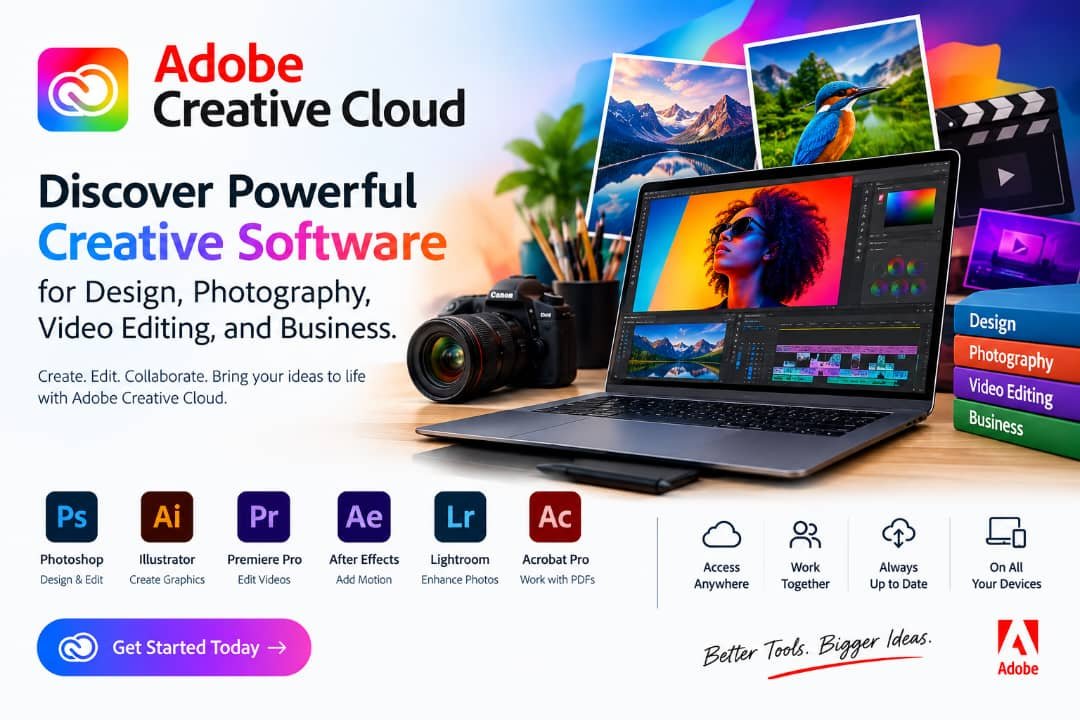
In today’s digital world, creativity and technology work together to transform ideas into extraordinary results. Whether you are a graphic designer, photographer, video editor, content creator, student, or business professional, having the right creative software can make a significant difference in your work. This is where Adobe stands out as a leading name in digital creativity and professional software solutions.
From designing stunning graphics and editing professional photographs to producing engaging videos and creating polished documents, Adobe provides a powerful collection of tools designed to help people turn their ideas into reality.
At ZolarFinds.com, we help you discover software that matches your lifestyle, professional goals, and budget. In this guide, we explore Adobe’s creative ecosystem, its key applications, and how to determine whether Adobe software is the right choice for your needs.
What Is Adobe?
Adobe is a global software company known for developing creative, document management, digital marketing, and productivity solutions. Its products are widely used by individuals, businesses, educational institutions, and creative professionals.
Adobe’s software ecosystem includes tools for graphic design, image editing, video production, digital illustration, PDF document management, and more.
One of its best-known offerings is Adobe Creative Cloud, a collection of creative applications and services that helps users produce professional digital content.
Rather than relying on multiple disconnected tools, users can choose applications that support different stages of their creative workflow.
Why Choose Adobe Creative Software?
Choosing the right software is about more than accessing advanced features. It is about improving efficiency, developing professional skills, and producing high-quality results.
Adobe offers several advantages for users who want to take their creative projects to the next level.
1. Professional Design Capabilities
Adobe provides tools for creating visual content ranging from social media graphics and marketing materials to complex illustrations and professional brand identities.
Adobe Photoshop is widely used for image editing, photo manipulation, and digital artwork, while Adobe Illustrator focuses on vector graphics, logos, icons, and scalable illustrations.
These tools can help designers create consistent, polished visuals for websites, advertising campaigns, businesses, and personal projects.
2. Powerful Video Editing and Content Creation
Video content has become an essential part of digital marketing, education, entertainment, and online communication.
Adobe Premiere Pro offers professional video editing capabilities, allowing creators to assemble footage, refine audio, add transitions, and produce engaging video projects.
For motion graphics and visual effects, Adobe After Effects provides tools for animation, compositing, and dynamic visual elements.
Together, these applications can support workflows ranging from short promotional videos to more complex productions.
3. Creative Photography and Image Enhancement
Photographers need tools that help them organize images, improve visual quality, and express their creative vision.
Adobe Lightroom is designed for photo organization, color correction, exposure adjustments, and batch editing. Photoshop provides additional flexibility for detailed retouching, compositing, and advanced image manipulation.
Whether you are editing product photography, travel images, portraits, or promotional visuals, these applications offer different approaches to improving your results.
4. PDF Documents and Digital Productivity
Creative work is only one part of Adobe’s software ecosystem.
Adobe Acrobat provides tools for viewing, creating, editing, organizing, and sharing PDF documents, with specific features depending on the product version and subscription.
For students, freelancers, businesses, and professionals, PDF tools can make it easier to manage contracts, reports, forms, proposals, and other important documents.
This makes Adobe relevant not only to creative professionals but also to people who need practical document management solutions.
Explore Popular Adobe Applications
Different Adobe applications serve different purposes. Understanding their main functions can help you choose software that suits your goals.
Adobe Photoshop — Photo Editing and Digital Art
Best suited for photographers, graphic designers, digital artists, and content creators who need detailed image editing and visual composition tools.
Adobe Illustrator — Vector Design and Branding
Ideal for creating logos, icons, illustrations, brand assets, and graphics that need to scale without losing their sharpness.
Adobe Premiere Pro — Professional Video Editing
A strong option for video creators, marketers, and production professionals who need detailed control over video editing and post-production.
Adobe After Effects — Motion Graphics and Visual Effects
Useful for animators and video professionals creating animated titles, motion graphics, visual effects, and other dynamic content.
Adobe Lightroom — Photography Workflows
Designed for photographers who want to organize, adjust, and enhance large collections of photographs.
Adobe Acrobat — PDF Management
Suitable for people who regularly work with digital documents, including students, office professionals, freelancers, and business owners.
Adobe Express — Quick Creative Content
A more accessible option for creating social media posts, promotional graphics, presentations, and other visual content without the complexity of a full professional design workflow.
Application features, availability, and pricing may vary by plan, region, and subscription.
How Adobe Can Help Your Business Grow
For businesses competing in a digital marketplace, professional visual communication can help build trust, improve brand consistency, and communicate value more effectively.
Adobe applications can support several important business activities.
Digital marketing: Create promotional graphics, campaign visuals, advertisements, and social media content.
Brand development: Design logos, marketing materials, and visual assets that support a consistent brand identity.
Video marketing: Produce product demonstrations, promotional videos, tutorials, and engaging visual stories.
Content production: Develop graphics and images for websites, blogs, email campaigns, and online publications.
Document management: Prepare professional PDF proposals, reports, forms, and business documents.
For businesses that regularly produce digital content, selecting suitable creative software can help establish a more organized and efficient production process.
However, software alone does not guarantee business growth. Strong strategy, useful content, audience understanding, and consistent execution remain essential.
Is Adobe Suitable for Students and Beginners?
Adobe is not exclusively for experienced professionals. Beginners and students can also benefit from its applications, depending on their learning goals and available budget.
For example, students interested in graphic design may begin by learning Photoshop or Illustrator. Aspiring video editors can explore Premiere Pro, while photographers may prefer Lightroom.
Those who need simpler tools for everyday content creation can consider Adobe Express.
Before subscribing, beginners should consider the learning curve, the features they actually need, and whether a simpler or less expensive alternative would meet their requirements.
A good starting point is to choose one application, learn its essential features, and gradually develop more advanced skills.
What Laptop Do You Need to Run Adobe Software?
Choosing the right laptop is an important part of building a reliable creative workflow. The ideal configuration depends on which Adobe applications you intend to use and the complexity of your projects.
For everyday design tasks and lighter creative work, a modern laptop with a capable processor, sufficient memory, and a fast SSD can provide a practical starting point.
For professional video editing, complex visual effects, high-resolution photography, or demanding creative projects, additional processing power, more memory, and a capable graphics processor may be beneficial.
Consider these general guidelines when comparing laptops:
- Processor: Choose a modern, capable CPU appropriate for your applications.
- RAM: 16 GB is a useful starting point for many creative workflows; 32 GB or more can be beneficial for demanding video editing and multitasking.
- Storage: An SSD helps with application loading and project access. Larger projects may require additional storage.
- Graphics: A capable GPU can improve performance in supported video, rendering, and effects workflows.
- Display: Look for a sharp display with suitable color accuracy if your work depends on visual precision.
- Cooling and battery life: Consider sustained performance, fan noise, portability, and power requirements.
These are general recommendations rather than universal minimum requirements. Always check the current system requirements for the specific Adobe application and version you plan to use.
At ZolarFinds.com, our goal is to help you discover laptops that match your software needs, work style, and budget.
Adobe Pricing: What Should You Consider?
Adobe offers different plans and purchasing options, and the cost depends on the application, subscription type, region, and eligibility for special offers.
Some users may prefer a single-app subscription, while others may benefit from access to multiple Creative Cloud applications. Document-focused users may want to investigate Acrobat plans separately.
Before purchasing, consider the following:
- Which applications will you actually use?
- Do you need one application or several?
- Will you use the software regularly enough to justify a subscription?
- Are there student, teacher, business, or other eligible pricing options?
- Does the plan include the features and services you require?
- What are the renewal terms, cancellation conditions, and total ongoing costs?
Always review the current plan details on Adobe’s official website before making a purchase. Avoid paying for features you do not need, and compare alternatives when your budget is limited.
Adobe vs. Free Creative Software
Adobe is a strong choice for users who need professional tools, advanced workflows, or compatibility with established creative environments. However, it is not automatically the best option for everyone.
Free and lower-cost alternatives may be sufficient for basic image editing, simple graphic design, or occasional content creation.
The right choice depends on your skill level, project requirements, preferred workflow, and budget.
If you work with clients, collaborate with other professionals, or need particular industry-standard features, Adobe may be worth considering. If you only create occasional social media graphics or perform simple edits, a simpler tool may provide better value.
The smartest software decision is the one that solves your actual problems without adding unnecessary costs or complexity.
How to Get Started with Adobe
Getting started is easier when you have a clear objective.
Step 1: Identify your goal. Decide whether you want to edit photographs, design graphics, produce videos, create animations, or manage PDF documents.
Step 2: Select the right application. Match your goal with an appropriate Adobe product instead of purchasing a large software package immediately.
Step 3: Check compatibility. Review the application’s current system requirements and confirm that your laptop can run it effectively.
Step 4: Explore available plans. Compare subscriptions, trials if offered, and eligible discounts through Adobe’s official website.
Step 5: Learn through practice. Start with small projects, official tutorials, and practical exercises that build your skills over time.
Step 6: Evaluate your progress. As your projects become more demanding, determine whether you need additional applications, improved hardware, or a different subscription.
Following these steps can help you make a more informed decision and build a creative setup that grows with your ambitions.
Discover Adobe with ZolarFinds.com
At ZolarFinds.com, we believe the right technology should make your work easier, support your creativity, and help you achieve your goals.
That is why we focus on discovering useful laptops and software for different needs, lifestyles, and budgets.
Whether you are looking for professional design applications, powerful video editing tools, photography software, or practical PDF solutions, understanding your options is the first step toward making a confident decision.
Adobe offers a broad collection of creative and productivity tools, but the best application for you depends on what you want to accomplish.
Explore the available products, compare their features, review the pricing, and select the tools that provide genuine value for your work.
Ready to Explore Adobe?
Visit Adobe’s official website to explore its applications, compare available plans, review system requirements, and discover the tools that fit your creative or professional goals.
Explore Adobe: https://www.adobe.com/
Make your next creative project more professional with software that matches your ambitions.
ZolarFinds.com — Discover the Right Laptops and Software for Your Needs.